The short answer
- Packing stays the same: fold, bag, close the flap, carton. No new machines.
- Grade: hot water grade only. The bag film dissolves in water above 65°C and holds up in damp air, sweat and rain.
- Size: six standard sizes from 8 × 12 to 14 × 18 inches with a 1.5 inch flap, or the size of your current poly bag.
- Thickness: 35 micron standard, from 30 micron.
- Logo: printed on one or both sides, in one or two colours.
Brands and retailers are asking their suppliers to take plastic out of their packaging, and the poly bag around every garment is the first thing they notice. A water soluble garment bag does the same job as a poly bag on your packing table and in the carton, but it is made without conventional plastics and dissolves in hot water. This guide is for apparel makers and exporters planning the switch. We make these bags in Coimbatore from our own patented PVA based resin, and have shipped 1,00,000 garment bags in a single order.

What changes, and what stays the same
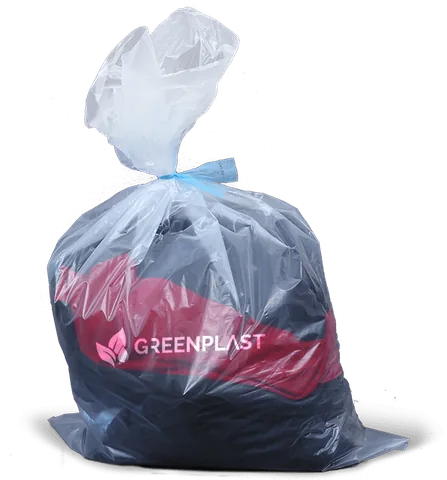
Almost nothing changes in your factory. The bags are clear, so the garment and its label stay visible. They are filled and closed the same way as poly bags, so they work on existing garment packing setups without costly changes.
What changes is the end of the bag's life. A poly bag stays plastic. Our garment bag is made from hot water soluble PVA film: it dissolves completely in water above 65°C. In cold water it only softens, and damp air, sweat or rain do not dissolve it. That is why garment bags are made only in hot water grade: the bag has to survive a humid factory, a sea container and a warehouse before anyone wants it gone.
Choosing the bag size
If you already pack in poly bags, the quickest route is to send us the width, height and flap of the bag you use today. We make the water soluble bag to the same size, so your folding and carton plan stay as they are.
If you are choosing a size from scratch, fold the garment exactly as it will be packed and measure its width and height. Leave a little room on each side so it slides in without stretching the film or straining the seals. Then compare with our standard sizes, all with a 1.5 inch (38 mm) flap:
| Width × height (inches) | Width × height (mm) | Flap |
|---|---|---|
| 8 × 12 | 203 × 305 | 1.5 inch (38 mm) |
| 9 × 13 | 229 × 330 | 1.5 inch (38 mm) |
| 10 × 14 | 254 × 356 | 1.5 inch (38 mm) |
| 11 × 16 | 279 × 406 | 1.5 inch (38 mm) |
| 13 × 16 | 330 × 406 | 1.5 inch (38 mm) |
| 14 × 18 | 356 × 457 | 1.5 inch (38 mm) |
| Custom | Made to your garment size | |
Different garments in one order can each have their own size. List them all in your enquiry.
Film thickness for your garments
Our standard is 35 micron, and we make garment bags from 30 micron onwards.
- 35 micron suits most folded garments: shirts, t-shirts, dresses and similar.
- 30 micron is lighter, for light garments where the bag mainly keeps out dust.
- Thicker film is available on request for heavy or bulky pieces, at extra cost.
Tell us what you pack and we confirm the micron with your quote.
Printing your logo
We print logos on garment bags, so your brand travels with every piece. The choices:
- Sides: one side or both sides.
- Colours: one colour or two. We recommend a single colour.
Send your artwork with your enquiry. Printing is charged extra and is included in your quote. The bag itself is always transparent.
On the packing table
- Fold the garment as you do today.
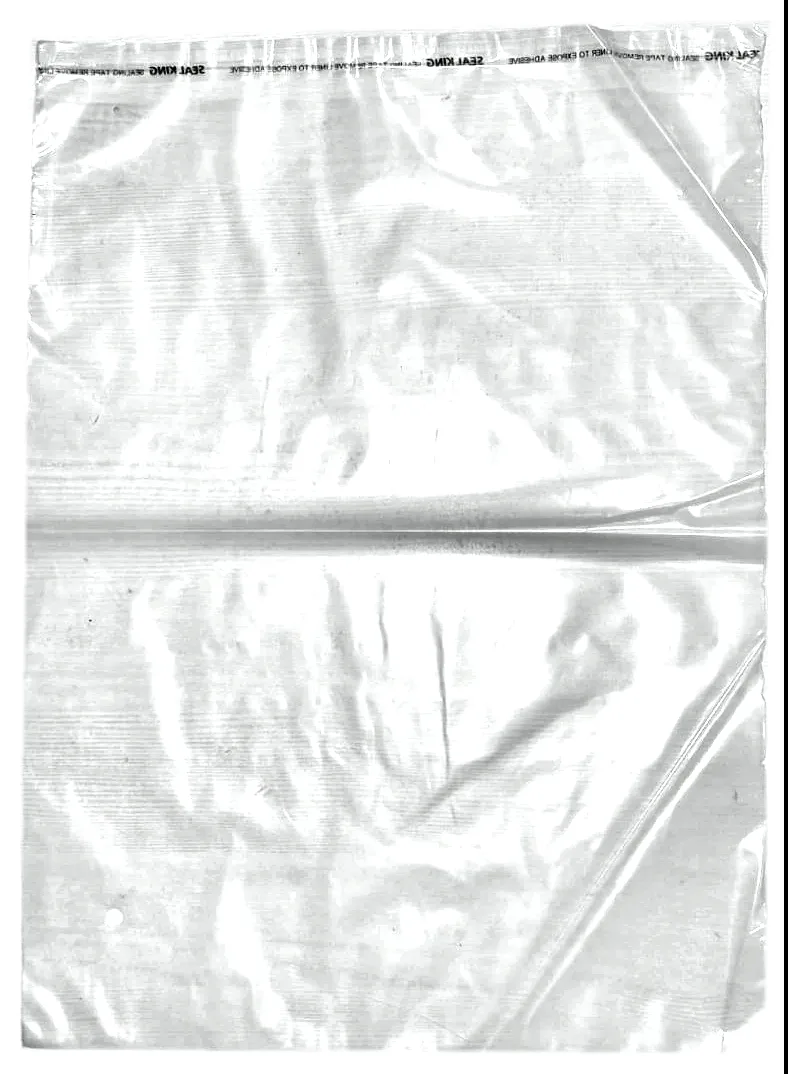
- Bag it: slide it into the bag on your existing packing table.
- Close: peel the strip and fold the flap over.
- Carton: bagged garments go into cartons and ship as usual.
A few habits help in the first weeks:
- Open a carton of bags only when you start packing, and close it again at the end of the shift.
- Keep bags away from water: wet floors, steam presses and wet hands. Hot water dissolves them, and cold water softens them.
- Pack garments dry. Freshly pressed garments should cool and dry before they go into the bag.
Humid weather, sea freight and storage
This is the question exporters ask most. Because the bags are hot water grade, damp air and monsoon humidity do not dissolve them, and packed garments stay covered through long transit. Our film and bags have been shipped to the UK and Croatia without problems.
- Storage: kept dry in their original packing, the bags keep as long as plastic bags, with no fixed expiry.
- Cartons: keep them sealed and dry until use, as you would with plastic.
- Containers: pack as you do today. Keep cartons off wet floors and away from any water.
What you can tell your buyers
Your buyer will want to know what the bag is and what happens to it. Stick to what is tested and documented:
- Material: made from a patented PVA based resin (Indian Patent No. 508991), with no conventional plastics.
- End of use: the bag film dissolves completely in water above 65°C. In cold water it only softens.
- The flap strip: the adhesive strip that closes the flap is not water soluble. Say that the bag film dissolves, not the whole closure.
- Test results: tested by CIPET, a Government of India institute, to ISO 17088:2021: 91.04% biodegradation in 165 days in compost conditions, and passed the disintegration, plant growth, earthworm and heavy metal tests.
- Safety: non-toxic.
Be careful with labels
We do not hold EN 13432, OK compost (home or industrial) or similar certificates at present. Do not print those marks, or words like "home compostable", on your packaging or swing tags. The CIPET results above are the claims we can back with a report, and we share the report and data sheets with your quote on request.
What to send for a quote
Garment bags are priced per bag. With these details we reply within one working day with the price and lead time:
- Bag size (width × height and flap), or the poly bag you use today, for each garment
- Micron, if you know it (35 micron is our standard)
- Quantity per size
- Printing: none, one side or both sides; one colour or two; your artwork
- Your country, if you are ordering for export
For export, orders are FOB Chennai or ex factory Coimbatore, quoted in GBP, EUR or USD, with 100% advance payment, and usually start from 1 tonne. More on our export page. See also our PVA water soluble garment bags and the hot water soluble film they are made from.
Questions buyers ask
Do water soluble garment bags dissolve in cold water?
No. Our garment bags are made only in hot water grade film. They dissolve in water above 65°C; in cold water the film softens but does not dissolve, and damp air, sweat or rain do not dissolve it.
Does the whole bag dissolve?
The bag film dissolves completely in water above 65°C. The adhesive strip on the flap is not water soluble, so it is left behind.
Can you make the bags in the same size as our poly bags?
Yes. Send us the width, height and flap of the poly bag you use today and we make the water soluble bag to that size. Our standard sizes run from 8 × 12 to 14 × 18 inches with a 1.5 inch flap.
Can the logo be printed on both sides, or in two colours?
Yes. We print on one side or both sides, in one colour or two. We recommend a single colour. Printing is charged extra and included in your quote.
Can we call the bags compostable?
You can say the film was tested by CIPET, a Government of India institute, to ISO 17088:2021 and reached 91.04% biodegradation in 165 days in compost conditions. We do not hold EN 13432, OK compost or similar certificates at present, so do not use those marks or logos on your packaging.
How are garment bags priced?
Per bag, for your size, micron, quantity and printing. A higher micron and logo printing are charged extra. We reply within one working day with the price and lead time.
Do you export garment bags?
Yes. Our film and bags have been shipped to the UK and Croatia. Export orders are FOB Chennai or ex factory Coimbatore, quoted in GBP, EUR or USD, with payment in advance, and usually start from 1 tonne.